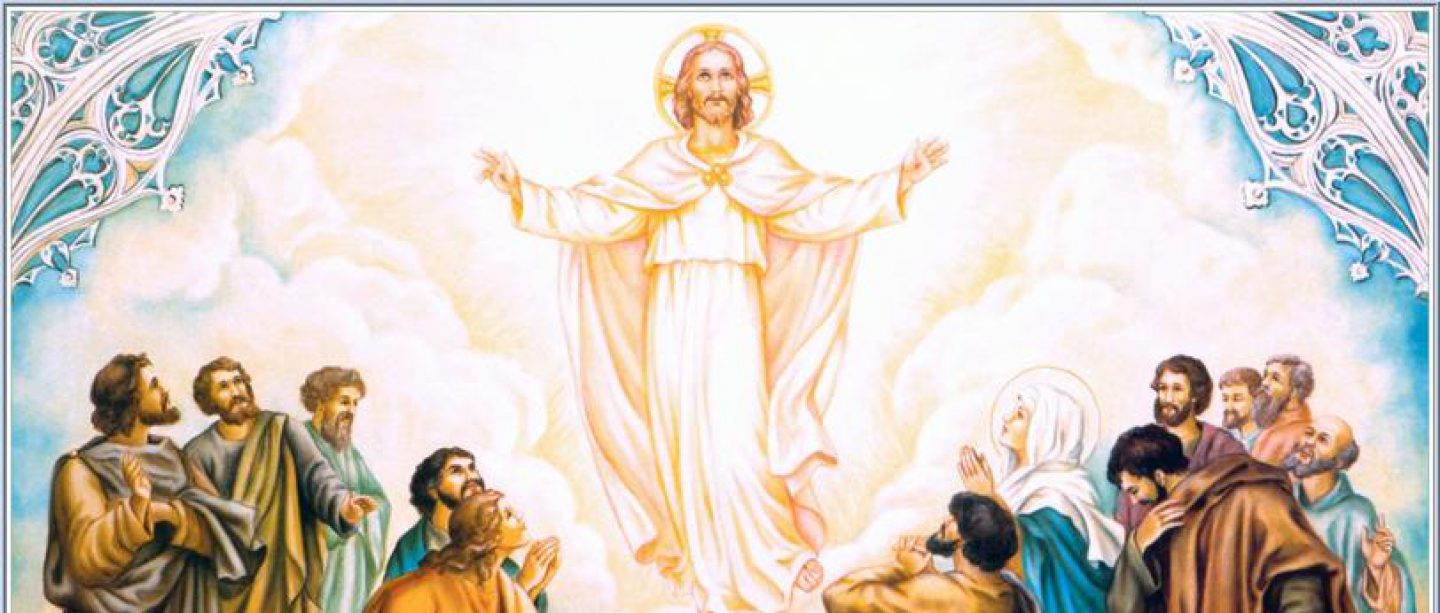

People who know me may be growing weary of my annual harping on the demotion by the post-conciliar Church of the Feast of Christ the King. If so, they can skip this post.
To recap history, the feast was established by Pope Pius XI, of happy memory, primarily to emphasize what the Magisterium had always called the “Social Kingship of Christ.” He explained the nature and purpose of this doctrine in wonderfully complete, yet concise, detail, in his encyclical Quas Primas, issued December 11, 1925. The Holy Father’s purpose in declaring the universal feast is summed up in its closing paragraphs, as follows: (Emphasis added)
“30. We would now, Venerable Brethren, in closing this letter, briefly enumerate the blessings which We hope and pray may accrue to the Church, to society, and to each one of the faithful, as a result of the public veneration of the Kingship of Christ.
31. When we pay honor to the princely dignity of Christ, men will doubtless be reminded that the Church, founded by Christ as a perfect society, has a natural and inalienable right to perfect freedom and immunity from the power of the state; and that in fulfilling the task committed to her by God of teaching, ruling, and guiding to eternal bliss those who belong to the kingdom of Christ, she cannot be subject to any external power. The State is bound to extend similar freedom to the orders and communities of religious of either sex, who give most valuable help to the Bishops of the Church by laboring for the extension and the establishment of the kingdom of Christ. By their sacred vows they fight against the threefold concupiscence of the world; by making profession of a more perfect life they render the holiness which her divine Founder willed should be a mark and characteristic of his Church more striking and more conspicuous in the eyes of all.
32. Nations will be reminded by the annual celebration of this feast that not only private individuals but also rulers and princes are bound to give public honor and obedience to Christ. It will call to their minds the thought of the last judgment, wherein Christ, who has been cast out of public life, despised, neglected and ignored, will most severely avenge these insults; for his kingly dignity demands that the State should take account of the commandments of God and of Christian principles, both in making laws and in administering justice, and also in providing for the young a sound moral education.
33. The faithful, moreover, by meditating upon these truths, will gain much strength and courage, enabling them to form their lives after the true Christian ideal. If to Christ our Lord is given all power in heaven and on earth; if all men, purchased by his precious blood, are by a new right subjected to his dominion; if this power embraces all men, it must be clear that not one of our faculties is exempt from his empire. He must reign in our minds, which should assent with perfect submission and firm belief to revealed truths and to the doctrines of Christ. He must reign in our wills, which should obey the laws and precepts of God. He must reign in our hearts, which should spurn natural desires and love God above all things, and cleave to him alone. He must reign in our bodies and in our members, which should serve as instruments for the interior sanctification of our souls, or to use the words of the Apostle Paul, as instruments of justice unto God.[35] If all these truths are presented to the faithful for their consideration, they will prove a powerful incentive to perfection. It is Our fervent desire, Venerable Brethren, that those who are without the fold may seek after and accept the sweet yoke of Christ, and that we, who by the mercy of God are of the household of the faith, may bear that yoke, not as a burden but with joy, with love, with devotion; that having lived our lives in accordance with the laws of God’s kingdom, we may receive full measure of good fruit, and counted by Christ good and faithful servants, we may be rendered partakers of eternal bliss and glory with him in his heavenly kingdom.
34. Let this letter, Venerable Brethren, be a token to you of Our fatherly love as the Feast of the Nativity of Our Lord Jesus Christ draws near; and receive the Apostolic Benediction as a pledge of divine blessings, which with loving heart, We impart to you, Venerable Brethren, to your clergy, and to your people.
Given at St. Peter’s Rome, on the eleventh day of the month of December, in the Holy Year 1925, the fourth of Our Pontificate.
PIUS XI”
The purveyors of the new ecclesiology of Vatican II took this feast, clearly intended to teach and remind the world of the aforementioned Social Kingship of Christ, and re-defined it as celebrating primarily Christ’s status as King of the Universe, largely ignoring the subsidiarity inherent in Pius XI’s teaching.
Certainly, He who created the Universe is its ruler. But the application of His Kingship must begin with each person and move outward, to all persons and to all aspects of society. Placing the emphasis first on the whole of Creation makes it immediately less personal and less explicitly practicable in daily life. Sadly, in my opinion at least, the hyper-ecumenism inserted into the Church’s teaching by The Council™️ resulted in the deliberate minimization of this aspect of the feast, to the spiritual detriment of all concerned. To be fair, we have encountered Novus Ordo priests who still preach the Social Kingship as Pius XI intended, but they are the minority, in our experience. More’s the pity.
Laudetur Jesus Christus!

